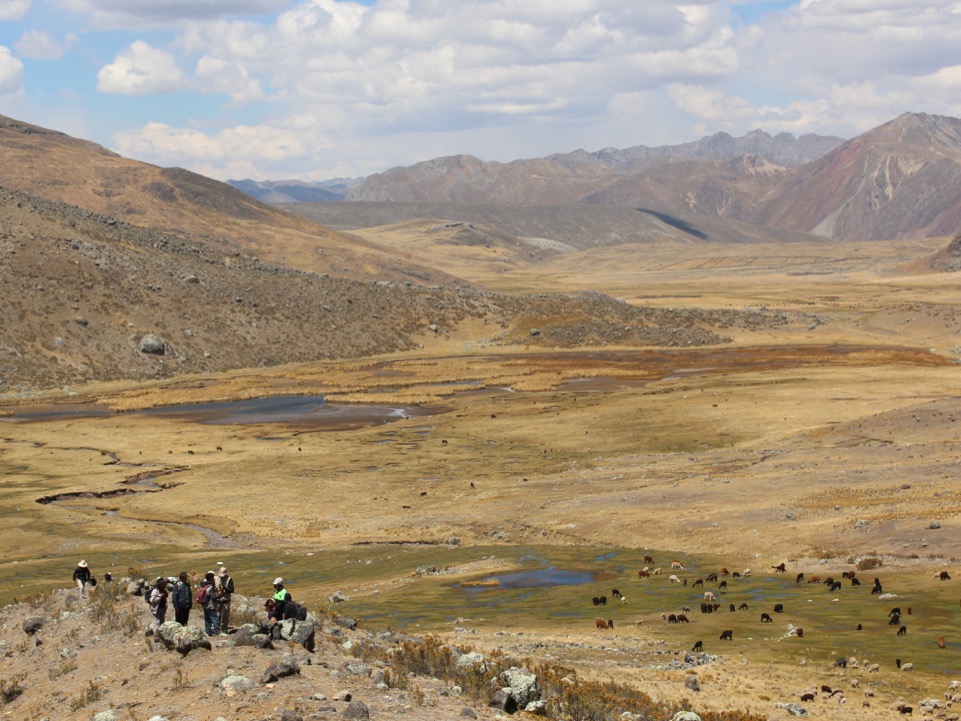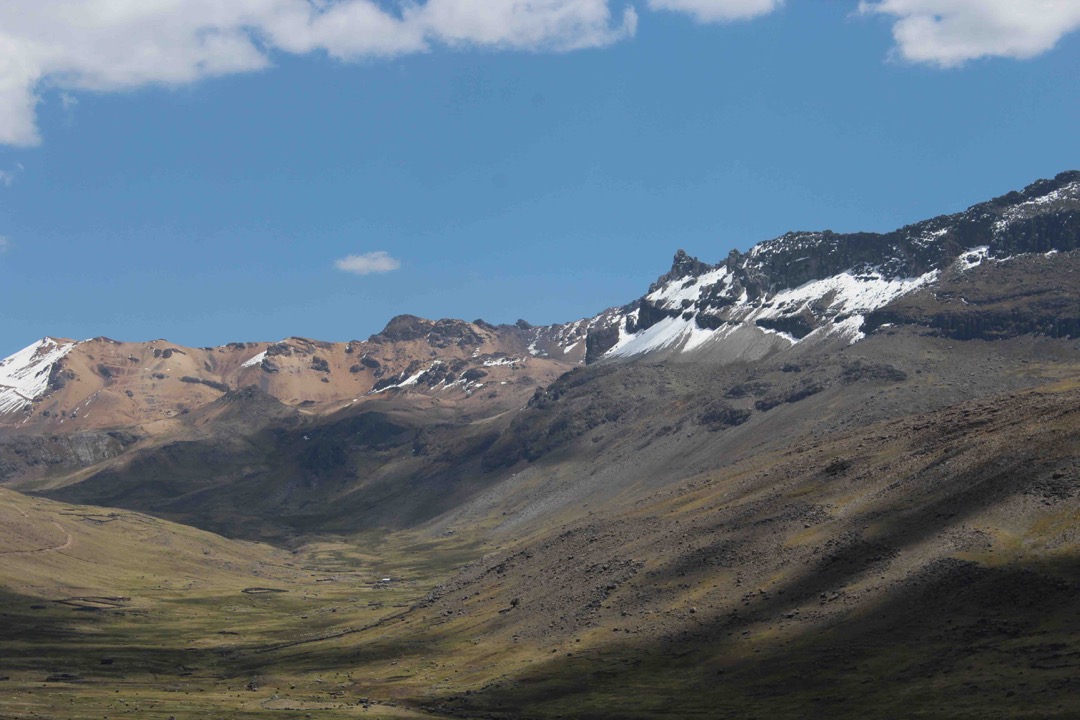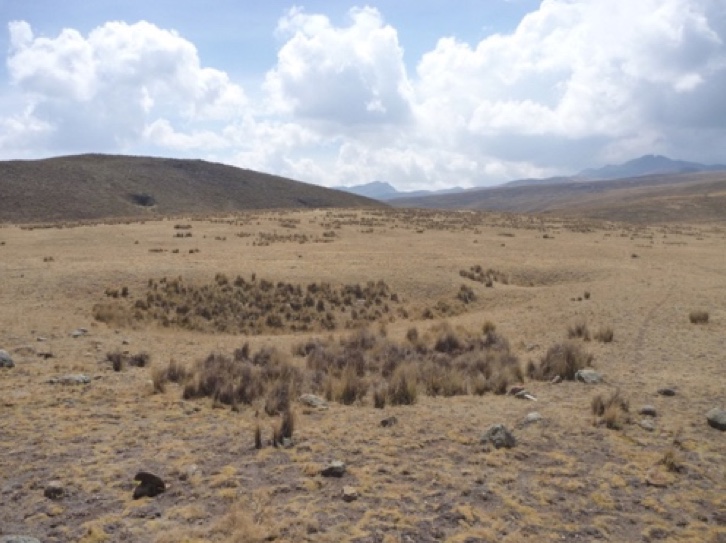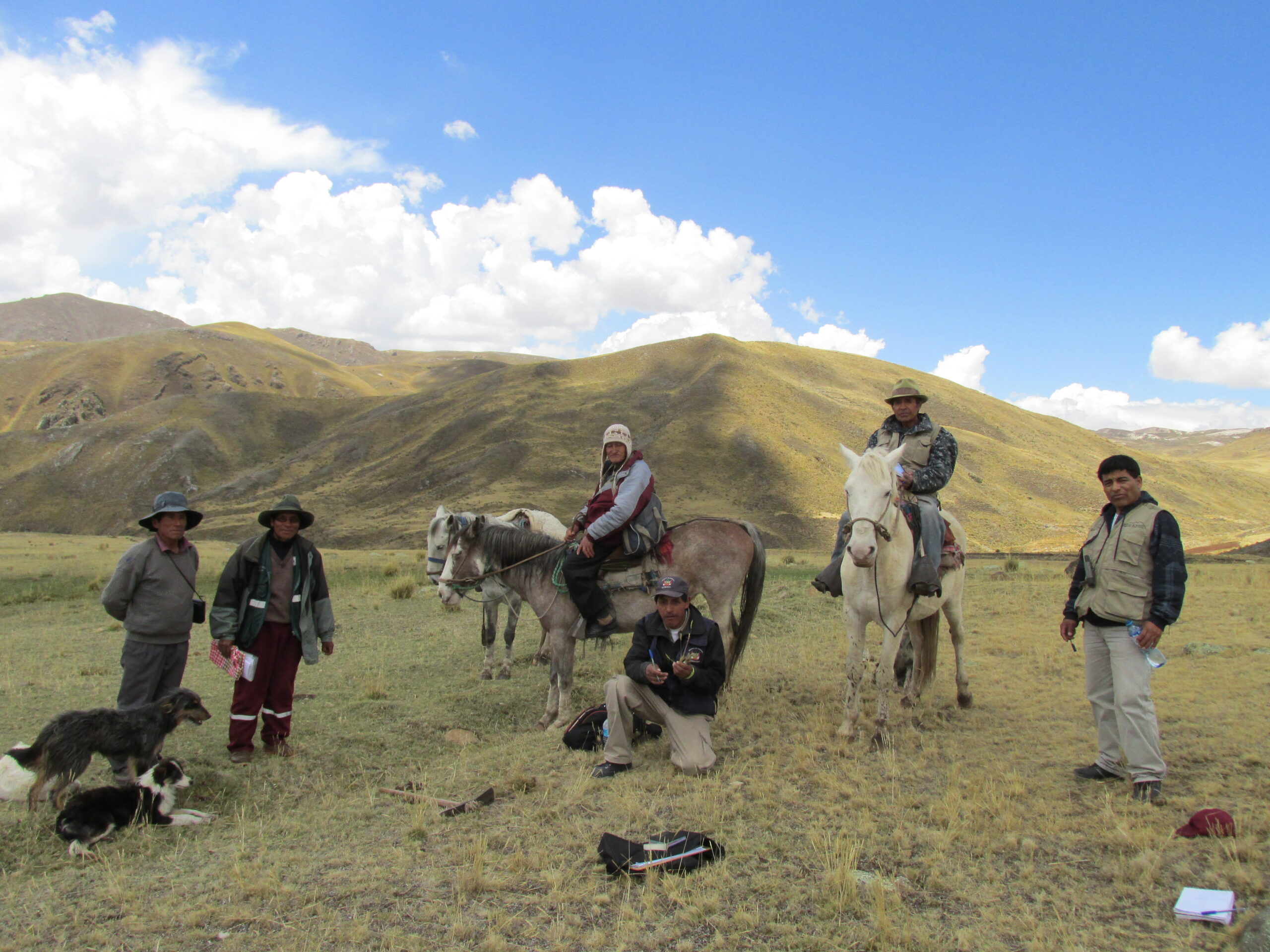
Glaciers are receding in the Andes mountains. Rainfall and storms are more erratic than ever. Once lush pastures are drying out. Traditional ways of making a living–herding and farming–don’t appeal to many young people. Migration to lowland cities for work and education is emptying out mountain towns. Many of these remote communities have deeply-rooted cultures dating back to the pre-Inca era. Their traditional knowledge and practices have been handed down through the centuries. And they are determined to find ways of adapting to climate change while maintaining their cultures.
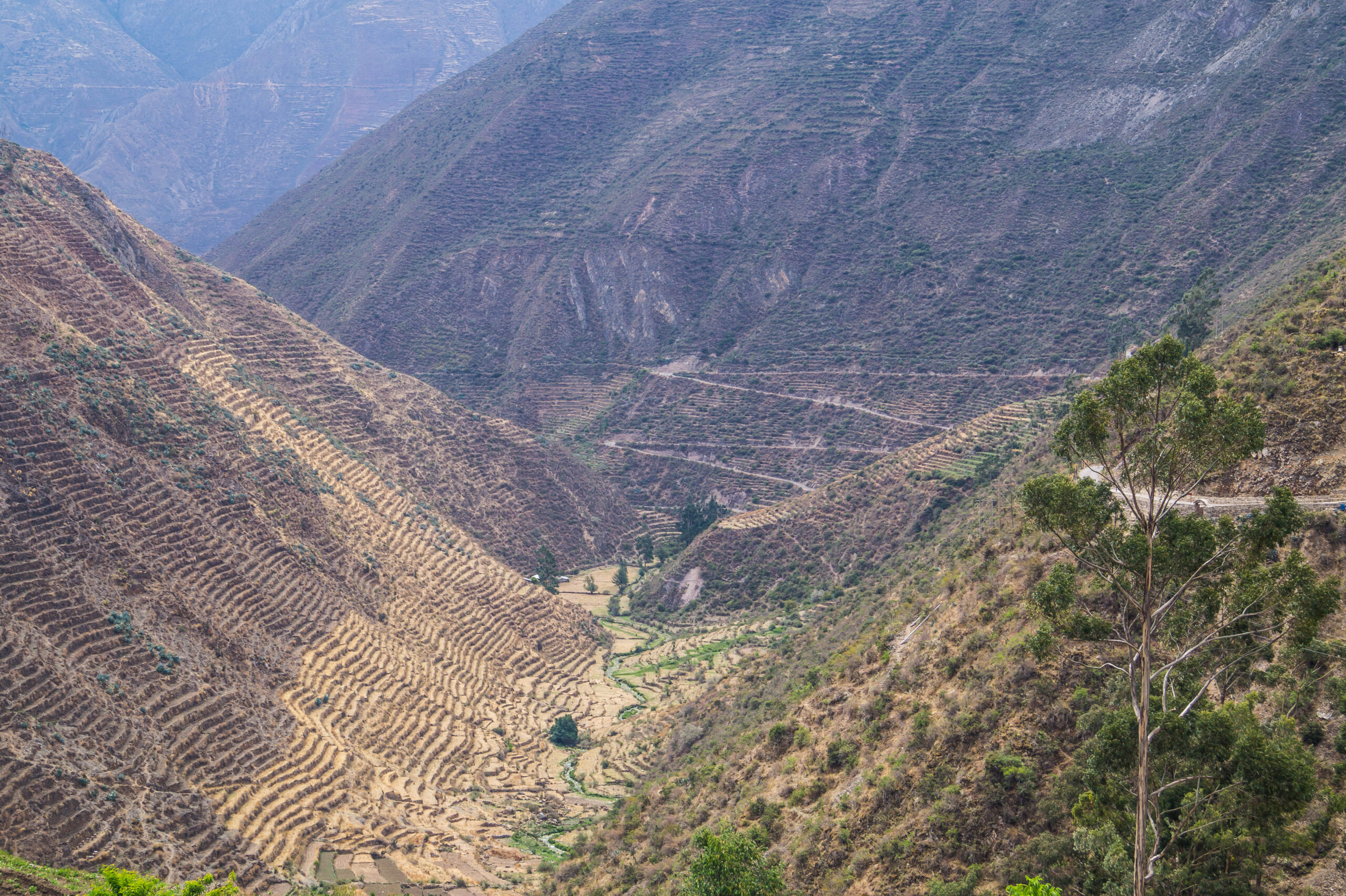
The most urgent challenge these highland villages face is a diminishing water supply. In the Andes of Peru, people have relied on glacial meltwater and rainfall to supply mountain wetlands and grasslands for as long as anyone can remember. Herders depend on grasslands for their llamas, sheep, cattle and alpaca to graze. Local farmers rely on a network of canals to irrigate their plots of potatoes, corn, quinoa, broad beans and other crops. Their food and water security depend on capturing and channeling water, just as it did centuries ago.
Reviving the Past to Face the Future
Instead of re-inventing the wheel, several indigenous communities decided to look to their past to face a future with less water. Their ancestors’ impressive water management systems were used for many centuries to slow or retain water in these high alpine regions. Why not revive ancient systems and improve them wherever possible?
For some communities, this was a tall order. In many parts of the Peruvian Andes, this ancestral technology is partially abandoned or in need of repair. In some mountain towns, only the elders remember the location of a water system used long ago.
Intricate, water-regulating infrastructure was used extensively by mountain people in this part of the Andes from the 1100s until the Spanish conquest in the mid-1500s. Through a complex of dams, reservoirs and open-earth canals, these interconnected systems recharged ground water reserves, increased water retained in the soil and improved water flow through irrigation canals. These ancient systems also created richer pastures for alpacas and llamas and their wild relatives, vicuñas and guanacos.
chancayllo y miraflores
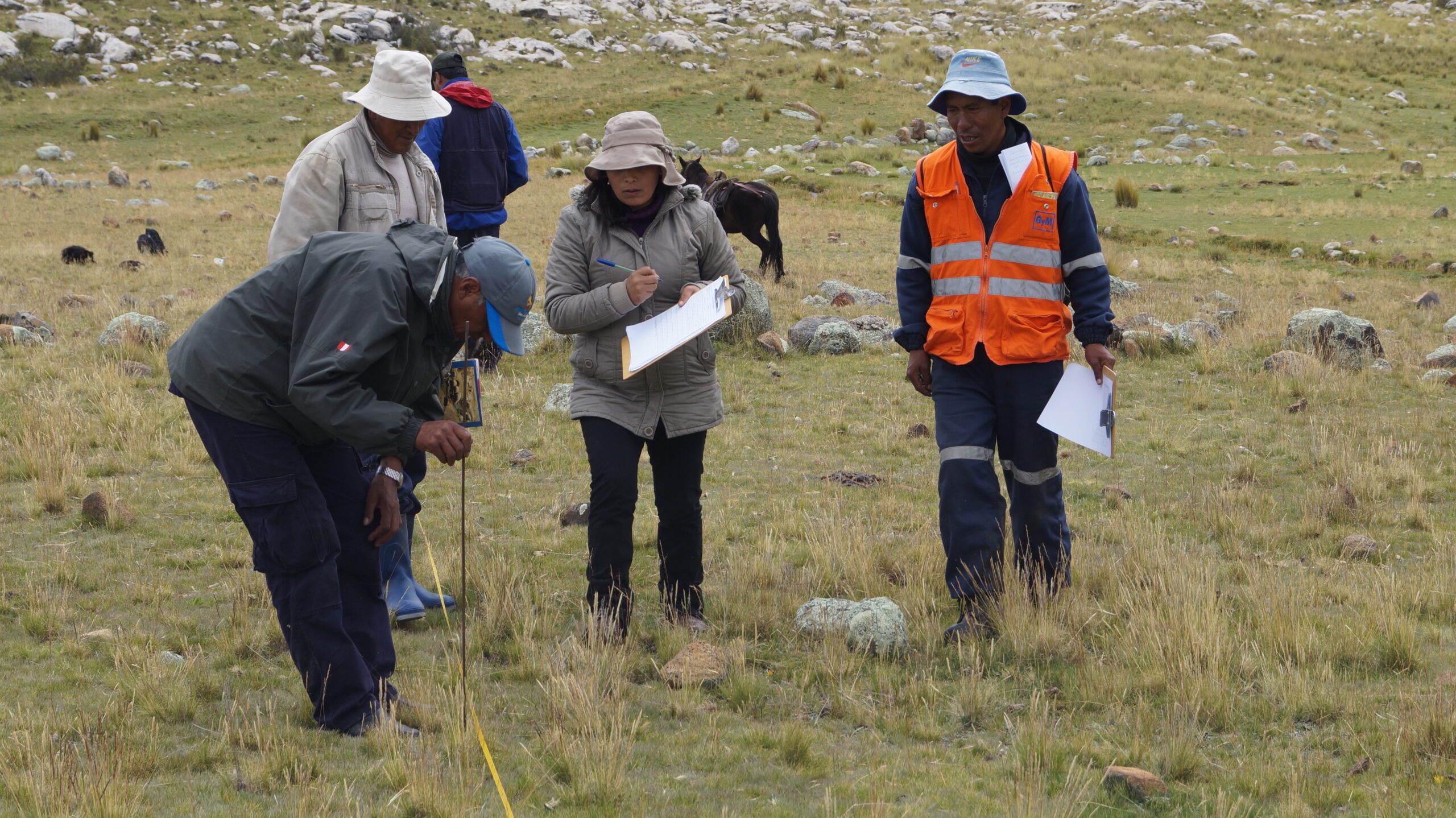
In the Nor Yauyos Cochas Landscape Reserve, The Instituto de Montaña (IdM) began working hand-in-hand with the communities of Miraflores and Canchayllo in 2013. Together they mapped nearby water systems, conducted diagnostic assessments in the field, had in-depth discussions about current water challenges and explored potential repairs and upgrades. The goal was to make both communities more resilient as they faced threats from climate change. SERNANP (the National Protected Areas Service, part of the Peruvian Ministry of the Environment) and IdM staff were partners in this effort.
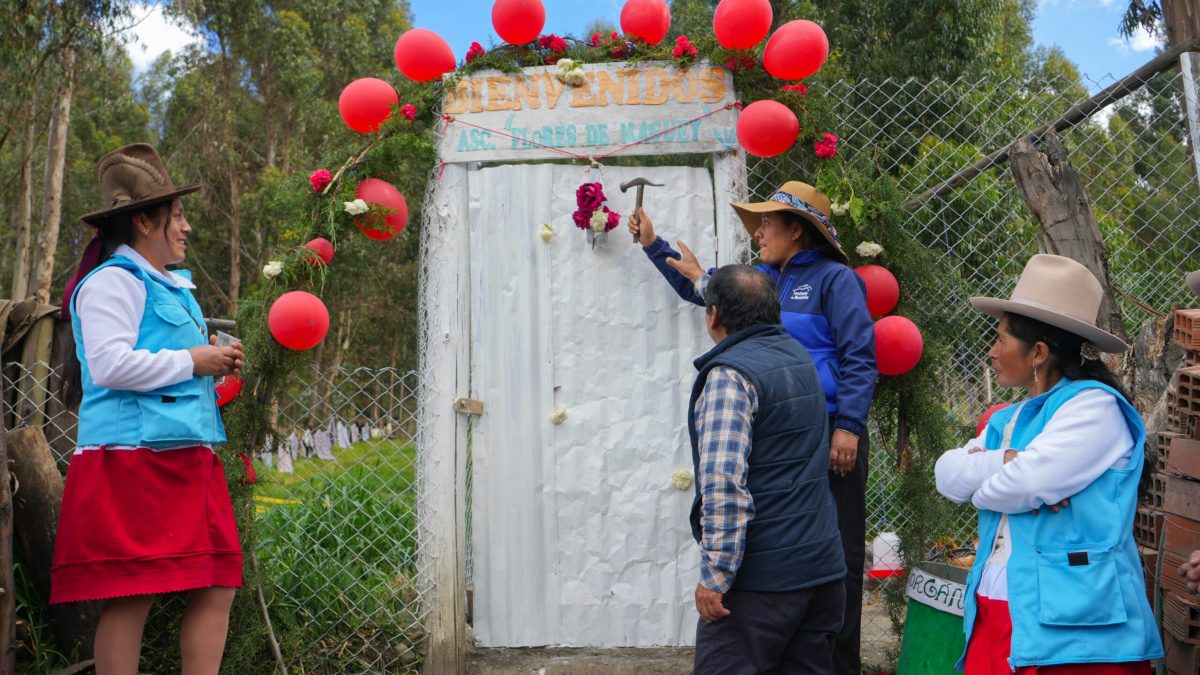
The Instituto’s approach with both communities was inclusive and participatory to ensure that all views were considered and indigenous knowledge and practices were honored. After several months of consultations and field diagnostics, each community decided on the best way to restore parts of their ancestral water systems. Each solution was tailored to fit specific, local needs and conditions.
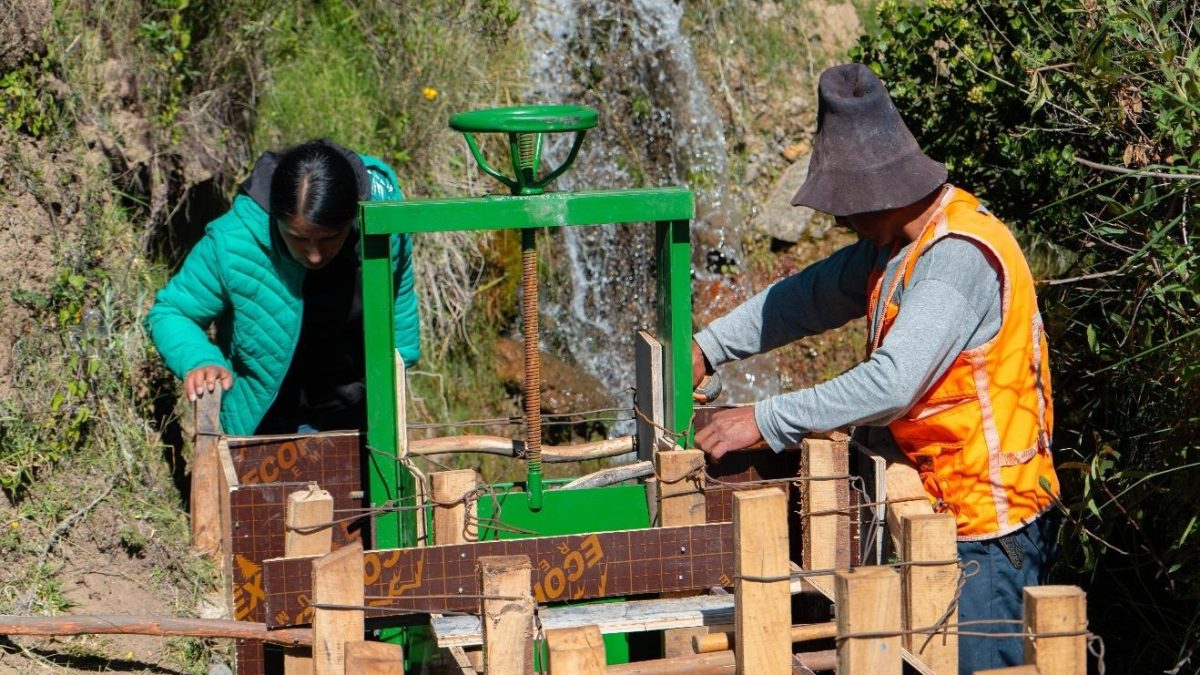
From 2013 through 2016, the Instituto de Montaña and other organizations assisted community members in both Canchayllo and Miraflores as they worked together to repair, restore and update ancient reservoirs, damns, irrigation canals and terraces. Some of their best solutions turned out to be hybrids. These restorations combined ancestral technology with modern materials and incorporated the latest science.
According to Dr. Jorge Recharte, Executive Director of Instituto de Montaña, «The importance of ancestral knowledge is gaining more and more recognition within the scientific community. Experts now agree that it is fundamental to acknowledge indigenous communities that remain connected to their past. Integrating their wisdom with modern technology and science can be the way to address not just environmental, but other contemporary issues as well.»
In the last few years, these practical, low-cost solutions have restored water sources, renewed highland pastures and won international recognition
Prizes that Helped Create a NetworK
In November, 2017, the Instituto’s project in Canchayllo and Miraflores–Ancestral Technologies and Climate Change–won the Solution Search «Farming for Biodiversity» Prize in the category of «Water Impact.» This international recognition helped raise awareness of the ancestral water systems being restored in the Andes. In April, 2018 an initiative called «RETAMA,» based on IdM’s work with mountain communities in Peru’s Ancash region and the Nor Yauyos Cochas Reserve, was awarded the 2018 St Andrews Prize for the Environment. The funds and connections from both of these prizes have helped jump start the RETAMA initiative with a focus on discovering, nurturing and scaling up indigenous innovations, especially related to mountain water.
National Meeting in Laraos
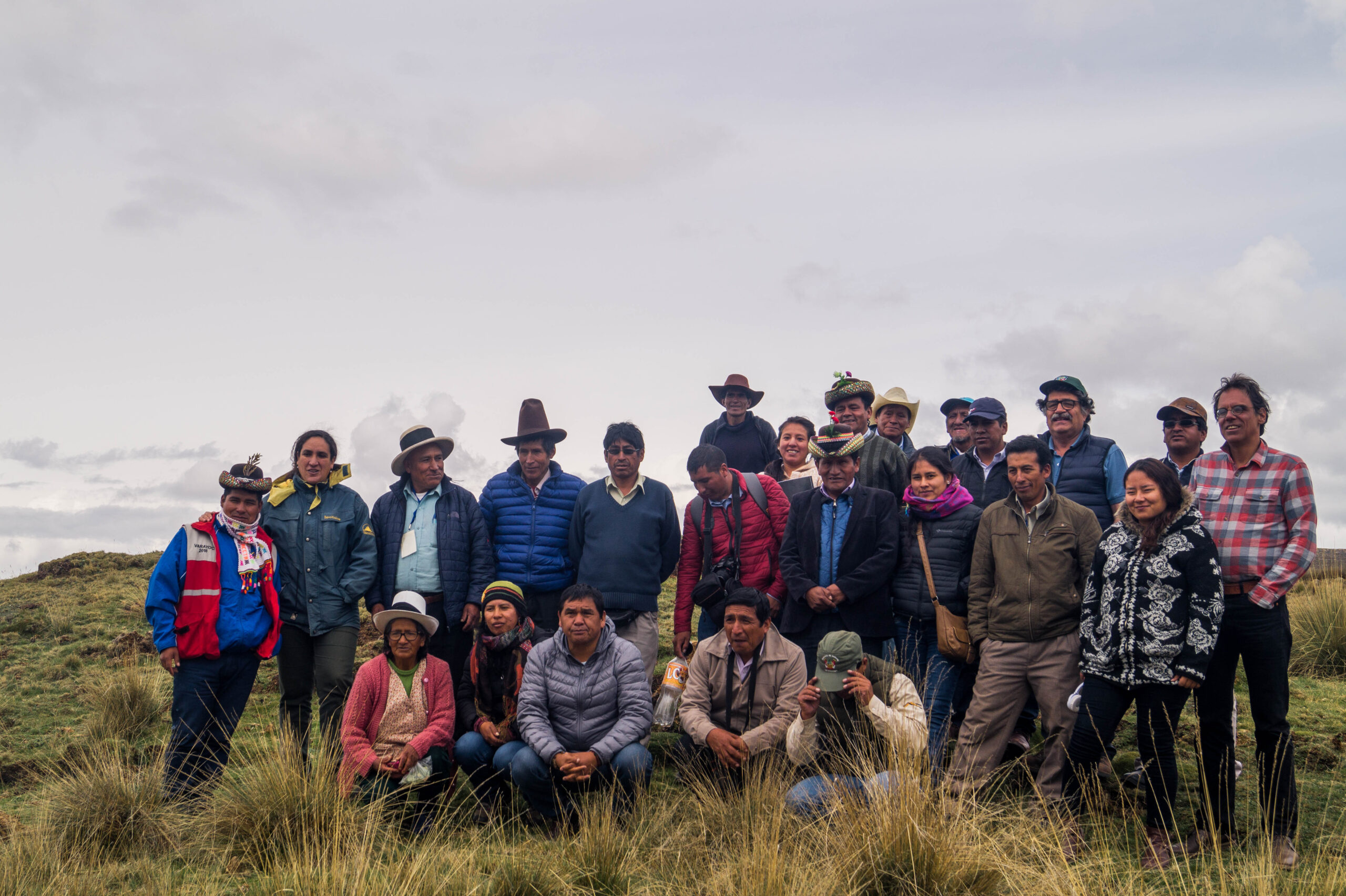
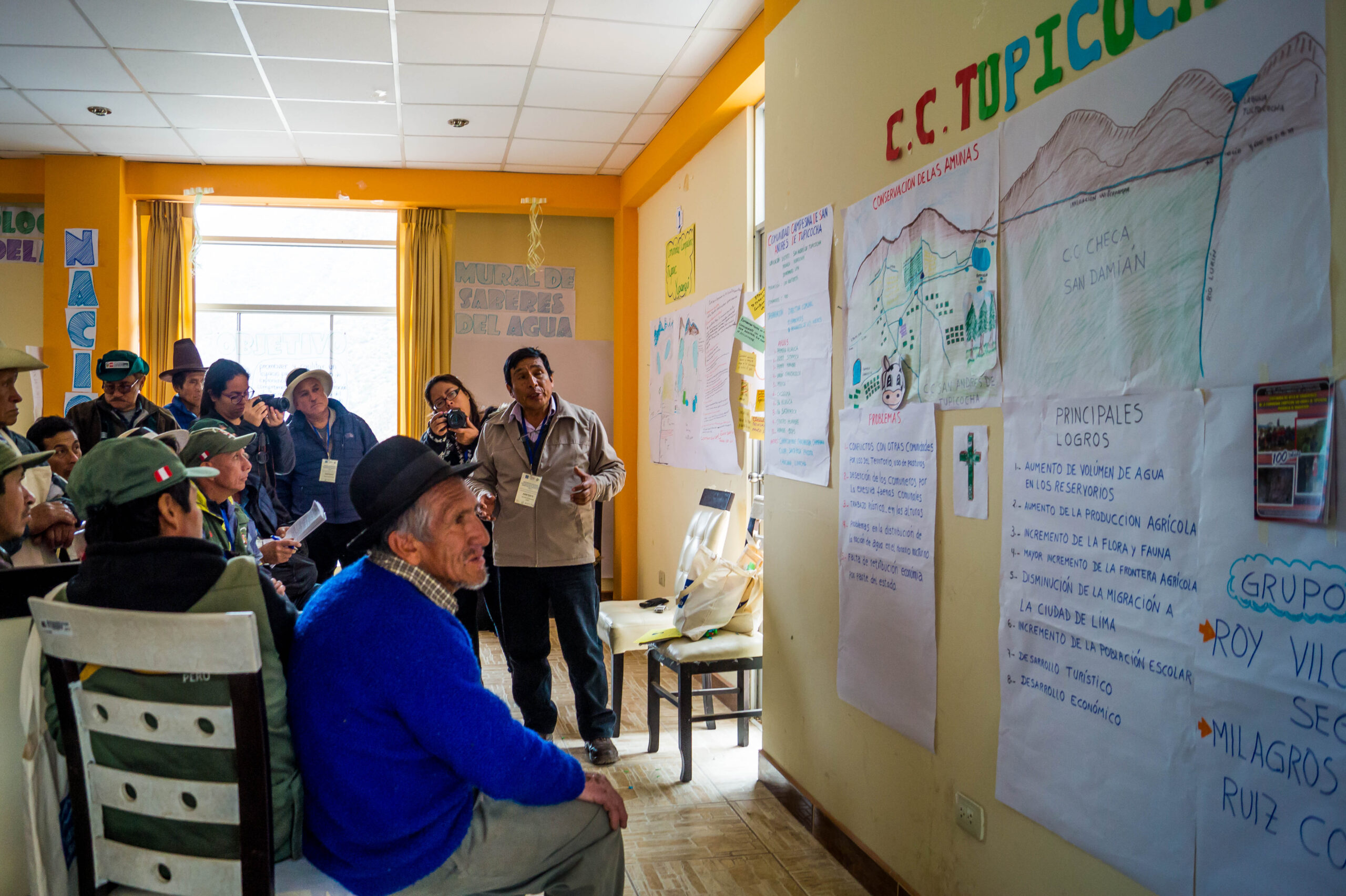
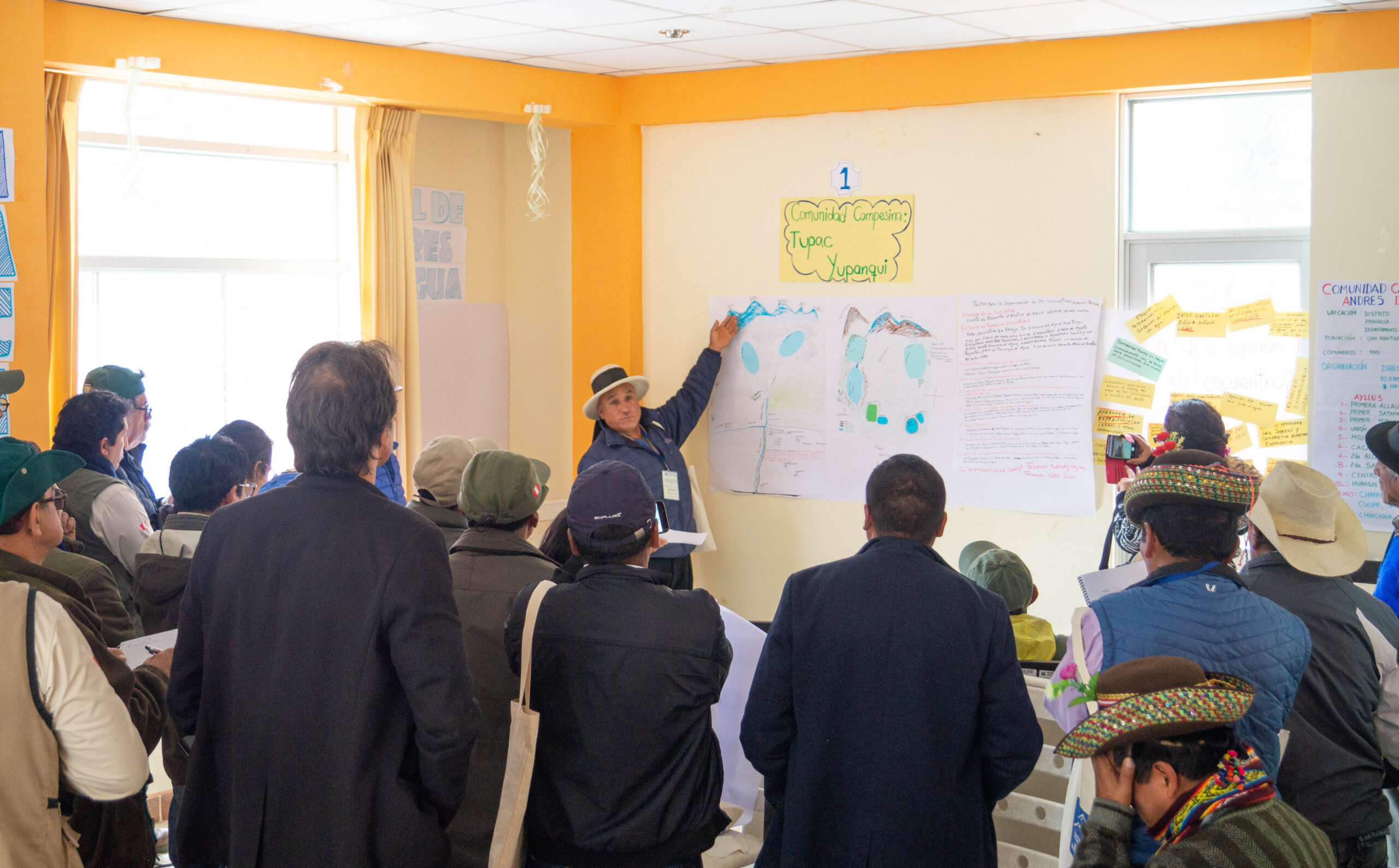
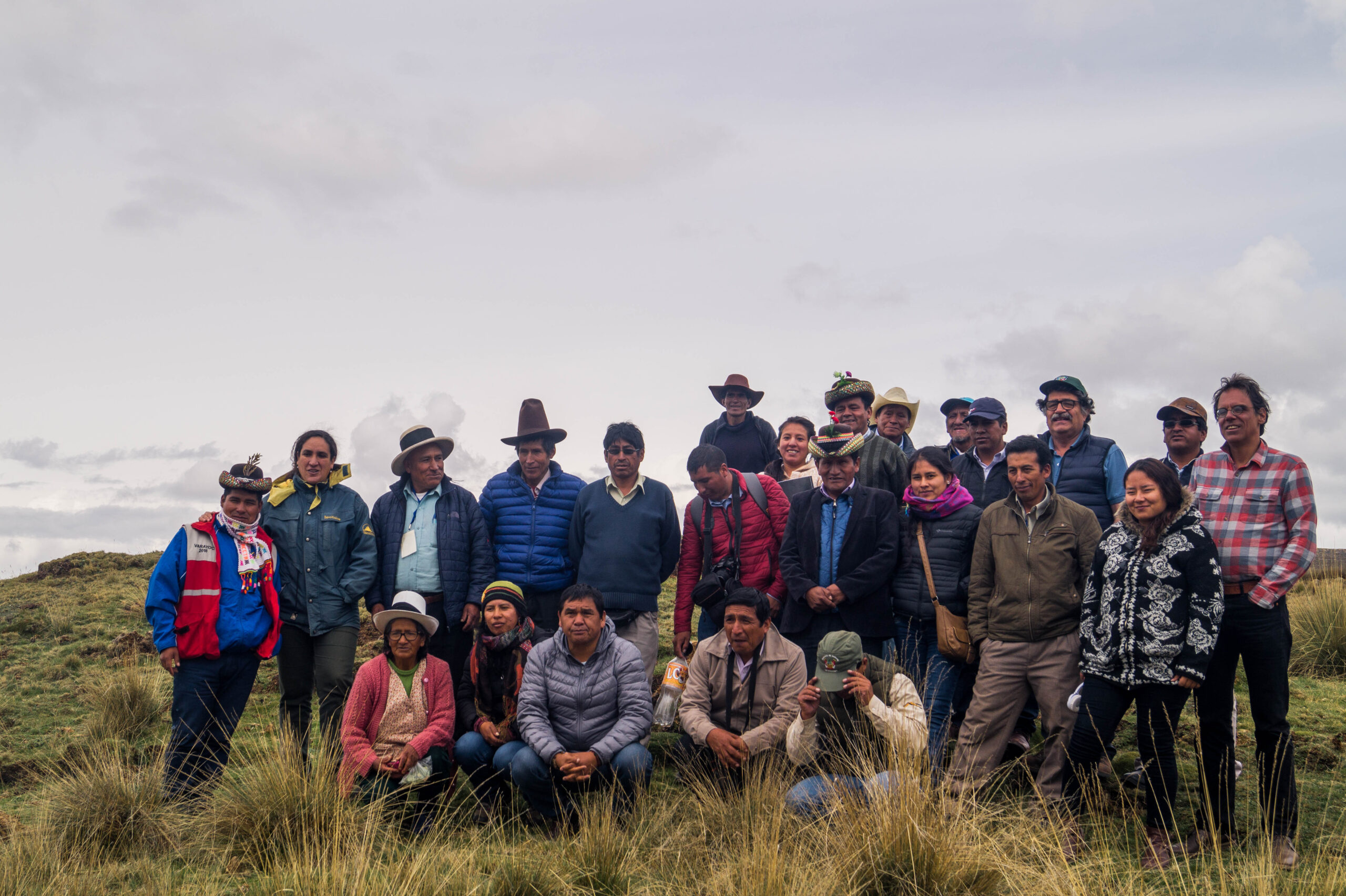
The first national meeting of indigenous leaders from Andean communities took place October 24 to 26, 2018. SERNANP and the Instituto de Montaña co-hosted this gathering in Laraos, Peru within the Nor Yauyos Cochas Landscape Reserve (NYCLR). Mountain communities from throughout the Lima, Junín, Ayacucho and Ancash provinces were invited. Participants represented the towns of Miraflores, Laraos, Canchayllo, San Andrés de Tupicocha, Quispillacta, Pamparomas and Tupac Yupanqui. The government agencies and non-government organizations involved in the RETAMA meeting included AGRORURAL, the Municipal District of Laraos, Sierra Azul, MERESE-FIDA, the NYCLR Board, the Bartolomé Aripaylla Association, the Agua-C Association, OIKOS-Peru and PUNKU-Andino.
After an offering to the mountains, traditional music and dancing, the RETAMA meeting got down to the business at hand–exchanging ideas, methods and experiences. Community leaders, archeologists, wildlife experts and Reserve staff and park guards had a chance to learn from one another during discussions, presentations and informal conversations. What became apparent early on was that conditions varied widely from one community to another. Some areas had amazing water systems but had lost much of their local population due to out-migration. Others were more advanced in recovering ancient systems and had been able to create conditions for people to stay and prosper.
During a trip to Canchayllo to see the restored Chacara Jutupuquio canal, there was more discussion about the best ways to keep working together and continue the friendships and alliances that had begun.
At the end of the meeting, the group decided to formally establish the RETAMA Network, to document the ancestral technologies already restored or in process, and to look for resources to scale up implementation of this type of restoration in the Andes. IdM staff promised to continue facilitating future meetings and the exchange and dialogue across cultures, providing technical/scientific information as needed and enlisting the support of new partners and funders.
An Expanding Alliance
Since the October 2018 meeting, TMI has been in touch with local, municipal governments, Peruvian agencies and international organizations. The Institute is currently collaborating with RARE/Solution Search, Western Colorado University, CISAL (Sustainable and Inclusive Communities in Latin America), and COOPECAN (largest cooperative of alpaca fiber producers in Peru) to explore different aspects of the scaling up process agreed upon at the RETAMA meeting.
«The RETAMA network will focus on an environmental and economic revival of mountain communities with simple, effective, low-cost solutions that respond to the impacts of climate change. We’ve always believed that sustainable mountain development is best achieved if it is in the hands of mountain people,» says IdM’s Dr. Jorge Recharte.
Check back for more about RETAMA’s progress!
Restoring Ancient Technologies and Water Management–RETAMA is an integral part of the Instituto de Montaña and is closely affiliated with the Scaling Up Mountain Ecosystem-based Adaptation Program. This program is part of the International Climate Initiative. The Federal Ministry for the Environment, Nature Conservation and Nuclear Safety (BMU) supports this initiative on the basis of a decision adopted by the German Bundestag.
IdM gratefully acknowledges our network of partners including the communities of Miraflores and Canchayllo, the Nor Yauyos Cochas Landscape Reserve and SERNANP, the Peruvian Ministry of Environment (MINAM) and the partners of the flagship Mountain EbA Project–UNDP, UNEP and the International Union for the Conservation of Nature (IUCN), of which the Instituto de Montaña is a proud member.
Related articles & videos:
- “Climate Change is Bad for Peru’s Pastures…But There’s a 1,200-Year-Old Fix” National Public Radio, online feature, 2019
- “Indigenous Communities Model How to Adapt to Climate Change.» Senior Hiker Magazine, 2019
- «Peru’s alpine herders revive ancient technologies to face the future.» Thompson Reuters, 2018
- Miraflores – community-led, participatory video.
- Canchayllo – community-led, participatory video.
- The significance of the 2018 St Andrews Prize for RETAMA – 2019 video update.
For the latest on the Instituto de Montaña’s work, check out our website!
Many thanks to IdM staff who contributed photos and many details to this story. Jesse Chapman-Bruschini, writer/editor.